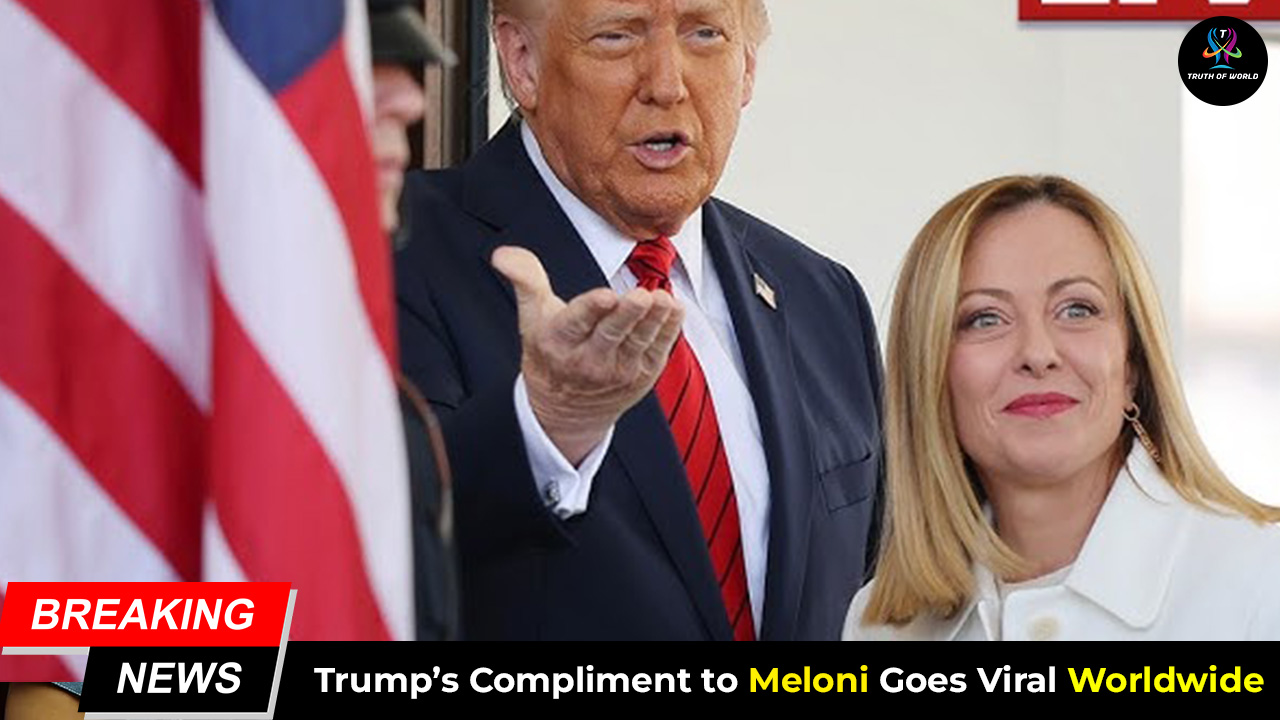
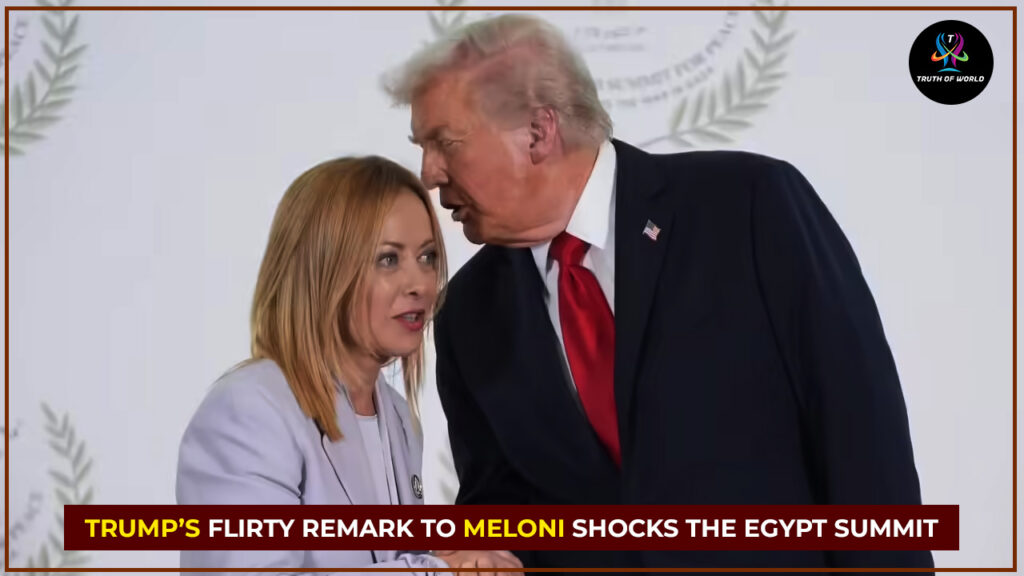
In an unexpected moment during the Gaza Peace Summit in Sharm El-Sheikh, U.S. former President Donald Trump drew widespread attention and some criticism by publicly calling Italian Prime Minister Giorgia Meloni “a beautiful young woman.” As the only woman among dozens of heads of state on stage, Meloni was singled out in a compliment whose diplomatic tone has become the topic of analysis and debate.
The remark came as world leaders gathered to sign a declaration to strengthen a ceasefire agreement between Israel and Hamas. But for a moment, the focus shifted from geopolitics to gender, public speech, and the lines between flattery and impropriety.
The Scene: Summit Diplomacy Meets Personal Compliment
During the closing session, Trump addressed Meloni directly, saying:
“You don’t mind being called beautiful, right? Because you are.”
He prefaced the compliment by acknowledging that in American politics, making such a remark can be risky: He went on to call Meloni “incredible” as a leader and praised her political success in Italy. Meloni, standing behind other leaders on stage, was the only woman in the group. She appeared to smile and accept the remark without visible discomfort.
This exchange followed the signing of what Trump called the “Trump Declaration for Enduring Peace and Prosperity,” aimed at solidifying commitments to Gaza’s future
Reactions & Interpretation
Praise, Chuckles & Critique
Many observers viewed the moment as a mix of traditional swagger and risky rhetoric. Some applauded Trump’s boldness in breaching convention. Others saw it as a misstep, especially in a forum meant for serious diplomacy.
- Supporters argue that Trump’s remark was a personal compliment in an informal moment and that Meloni’s confident demeanor suggested she was comfortable.
- Critics contend it was inappropriate for such a setting, reducing a female head of government to her appearance and distracting from the summit’s weighty agenda.
Media outlets noted that Meloni was uniquely singled out, and that such remarks directed at male leaders would rarely if ever be made.
Cultural Context & Gender Norms
Fresh criticisms surfaced around how comments about appearance are politicized differently when directed at women. In American politics, reference to a female politician’s looks is often viewed as sexist or unprofessional. Trump himself acknowledged that in the U.S., such remarks could be “career-ending.”
Yet on the global stage, cultural norms differ. In parts of Europe and elsewhere, public compliments especially among allies can carry different social weight. Some analysts see Trump’s remark as signaling respect or camaraderie within a populist/conservative bloc.
Why This Matters: Power, Image & Diplomacy
1. Diplomatic Spaces Aren’t Immune to Personality
Even in tightly choreographed summits, unplanned moments can steer narrative. A compliment, joke, or awkward remark may overshadow policy talk especially when high-profile leaders are involved.
2. Gendered Expectations for Leaders
When a woman in power is complimented on appearance during official settings, it invites scrutiny. Is she reduced to a “beautiful” figure, or validated as a competent leader who also happens to be aesthetically admired? The dynamics are far different when the compliment is directed at men.
3. Trump’s Communication Style
This moment is consistent with Trump’s public persona boisterous, unfiltered, and willing to provoke. Whether intentional or spontaneous, such lines often generate media waves, keeping him in headlines, regardless of topic.
4. Meloni’s Positioning & Political Brand
Meloni representative of conservative, nationalist politics in Europe occupies a complex diplomatic position. Her acceptance or response to such public remarks can affect how she is perceived domestically and internationally.
Meloni: The Italian Leader Under the Spotlight
Rise to Power & Political Identity
Giorgia Meloni became Italy’s Prime Minister in 2022, leading the Brothers of Italy party. She is known for her right-wing, nationalist policies, particularly on immigration, cultural identity, and sovereignty.
Her standing among European conservatives has grown, and she often positions herself as a voice for traditional values and strong leadership.
Navigating Global Diplomacy
As a female leader in a male-dominated global stage, Meloni’s responses to compliments or criticism are delicate. Accepting a compliment gracefully does not always mean endorsement of its framing.
In this instance, she appeared poised smiling, composed, and moving on. Whether she later privately felt sidelined or reduced is unreported.
Broader Summit Context
The Gaza Peace Summit & Agenda
The gathering in Sharm El-Sheikh was convened to build on a ceasefire between Israel and Hamas and to lay groundwork for Gaza’s reconstruction and long-term peace. Heads of state, diplomats, and leaders from over 20 nations attended.
Trump co-chaired the summit with Egyptian President Abdel Fattah El-Sisi. Many viewed the summit as a critical moment for Middle East diplomacy, even amid skepticism about enforceability and political will.
Other Controversies Around Trump on the Trip
Amid praise for Meloni, Trump also made remarks about authoritarian leadership during his Middle East tour, drawing criticism from international human rights observers.
Some media framed Trump’s compliment as part of a broader effort to align with like-minded conservative leaders blurring personal charm with political strategy.
Risks & Rewards of the Comment
Potential Gains
- Media attention: The remark instantly grabbed headlines, increasing visibility for Trump, Meloni, and the summit itself.
- Solidarity signaling: Among aligned political networks, it might be read as affirmation“I see you,” in a rhetorical sense.
- Framing of boldness: Trump’s acknowledgment of risk (“I’ll take my chances”) might appeal to supporters who value audacity.
Possible Downsides
- Distraction from substance: The focus may shift from peace talks to gender commentary.
- Criticism of sexism: Opponents and media may frame the moment as inappropriate or disrespectful, particularly in diplomatic settings.
- Undermining gravitas: For Meloni, being complimented this way could overshadow her policy role, making her appear decorative rather than decisive.
What to Watch Going Forward
- Official Responses or Clarifications
Will Meloni’s office comment on whether she viewed the remark as flattering or dismissive? Will Trump clarify further? - Media Lens Shift
Will the headlines stay on peace and policy or will gender and commentary hog the spotlight? - Political Repercussions
Domestically in Italy, how will Meloni’s supporters and critics respond? In U.S. media, will the remark reignite debates about sexism in politics? - Pattern or One-Off?
Observers might watch for similar remarks from Trump or other leaders in future summits whether this is an isolated lapse or a pattern of rhetoric.
In the midst of a high-stakes international summit on peace, a brief exchange injected a human, personal note—one that reminds us that diplomacy is never just about policy. Words, tone, and the way leaders address each other can echo across media landscapes and shapeshift public narratives.
Trump’s comment “You don’t mind being called beautiful, right?” was at once flattering, provocative, and potentially risky. Whether it will be remembered as a charming interlude or a diplomatic stumble depends on how the players respond and how the world frames it.