New Delhi:
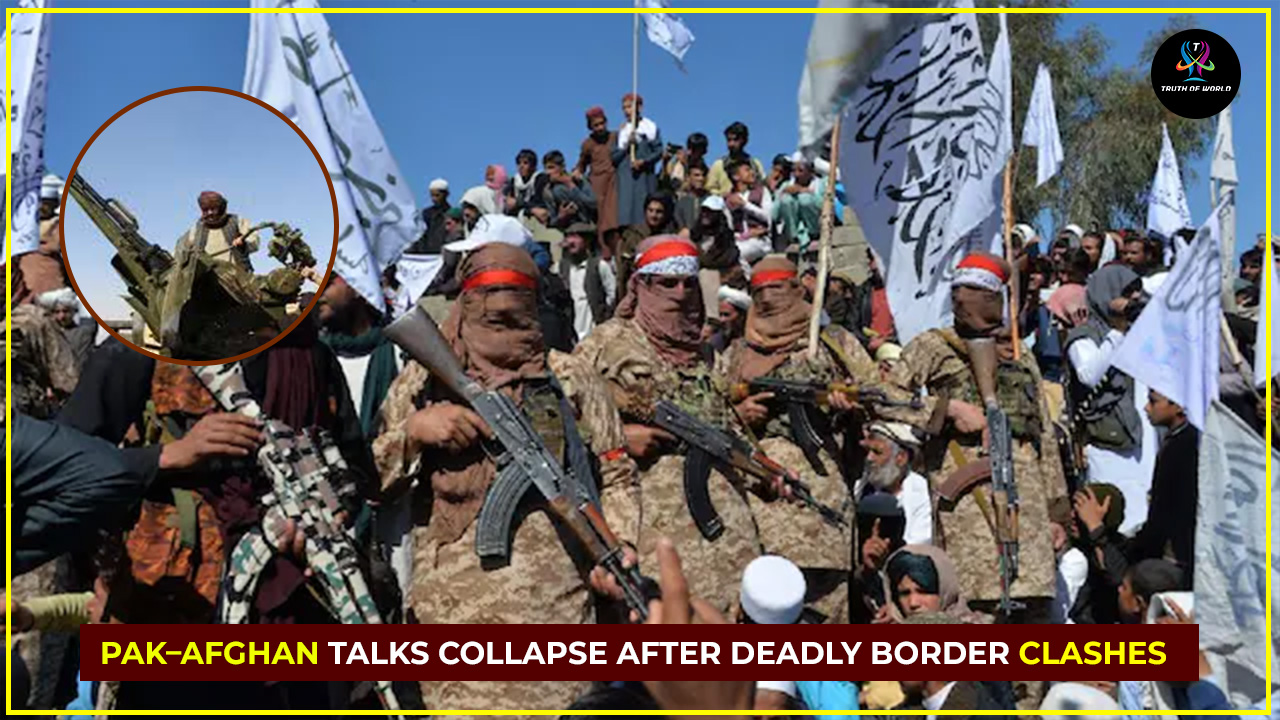
In a rare diplomatic move, Afghanistan’s acting Foreign Minister Amir Khan Muttaqi used his visit to India to send a sharp message to Pakistan, urging its leadership to take action against terror groups operating within its borders. Speaking in New Delhi, Muttaqi asserted that Afghanistan has eliminated all terrorist organizations from its territory and called on neighboring countries to follow the same example in the interest of regional peace.
Muttaqi’s comments, made from Indian soil, carry significant weight not only because of the historical tensions between India and Pakistan but also because they reflect the Taliban’s changing tone in regional politics. His words marked the first time a senior Taliban leader openly urged Islamabad to combat militancy while standing in India, signaling a possible shift in South Asian diplomatic equations.
Responding to questions about Pakistan-based militant groups like Lashkar-e-Taiba and Jaish-e-Mohammad, which have historically used Afghan territory to operate, Muttaqi firmly rejected any such claims. Muttaqi’s response was in reference to allegations made by international agencies and previous governments that the Taliban had provided safe havens to extremist groups before seizing control in 2021. His remarks suggested that the Taliban now seeks to project a new identity one focused on governance, diplomacy, and stability.Not a single one of them is in Afghanistan. Not an inch of our land is controlled by such groups anymore. The Afghanistan that was once accused of harboring militants has completely changed,” he said during an interview.
What made the statement particularly noteworthy was its venue New Delhi, the capital of India. Speaking on Indian soil, Muttaqi indirectly criticized Pakistan for its long standing policy of supporting cross border terrorism. Let other countries act against terror groups the way Afghanistan did. We have taken steps for peace, and others must do the same, he said.
This comment, though diplomatically worded, was widely interpreted as a clear message to Islamabad, where militant organizations have long found shelter. Analysts in both India and Afghanistan believe this marks a rare instance of the Taliban subtly holding Pakistan accountable the same nation that once supported their rise.
Muttaqi’s visit marked India’s first formal diplomatic engagement with the Taliban government since it took power in August 2021. For more than two years, New Delhi maintained a wait-and-watch policy, providing only humanitarian assistance through the United Nations and maintaining limited communication via technical channels. Now, the reopening of India’s Technical Mission in Kabul, with discussions to upgrade it into a full fledged embassy, signals a change in approach. India has expressed cautious optimism toward Afghanistan’s evolving political scenario, focusing on security cooperation, trade, and humanitarian support.
Indian External Affairs Minister Dr. S. Jaishankar, who met Muttaqi during the visit, reiterated that India remains committed to supporting the Afghan people while keeping regional security concerns at the forefront. According to sources, the meeting also discussed counter-terrorism coordination, humanitarian aid, and protection of minority communities in Afghanistan.
The timing of Muttaqi’s visit holds symbolic importance. South Asia continues to grapple with cross border militancy, proxy wars, and religious extremism issues that have strained India-Pakistan relations for decades. By calling for peace from within India, the Taliban appears to be repositioning itself as a responsible regional player rather than a pariah state. Experts say the Afghan leadership is trying to gain legitimacy and recognition from global powers, including India, while simultaneously distancing itself from Pakistan’s controversial security networks.
Since taking control in 2021, the Taliban have sought to shed their image as a militant outfit and portray themselves as a government capable of diplomacy. Muttaqi’s India visit was part of this broader strategy. The Taliban administration has repeatedly claimed to have dismantled terror networks such as ISIS-K within Afghanistan’s borders. They have also been working to establish economic and diplomatic ties with countries like China, Iran, Russia, and India to strengthen their international position. However, critics argue that such statements may be aimed at securing legitimacy while diverting attention from domestic human rights issues, including restrictions on women’s education and freedom of speech.
Muttaqi’s comments put Pakistan in an uncomfortable position. For years, Islamabad has been accused of harboring terror outfits and providing logistical support to groups targeting India and Afghanistan. Observers say that hearing such remarks from a Taliban minister once considered Pakistan’s closest ally could be diplomatically embarrassing. Pakistan has yet to issue an official response to Muttaqi’s statements, though local media reports suggest that government officials in Islamabad are “closely monitoring” the narrative emerging from New Delhi.
For India, Muttaqi’s statements offer both an opportunity and a challenge. New Delhi has long advocated for a peaceful and stable Afghanistan, free from the influence of extremist groups. If the Taliban’s claims of eradicating terrorism hold true, India could consider expanding cooperation in trade, infrastructure, and cultural exchange. India’s growing engagement also serves as a counterbalance to Pakistan’s and China’s increasing involvement in Afghan affairs. “India’s diplomatic reopening in Kabul is not an endorsement of the Taliban regime but a strategic necessity,” said former diplomat Vivek Katju. “New Delhi must maintain influence in Afghanistan to safeguard its long-term regional interests.”
Muttaqi’s message carried powerful symbolism. Delivering a peace statement from Indian soil a country that has been a victim of numerous terror attacks allegedly linked to Pakistan-based groups amplified the diplomatic weight of his words. The statement was not merely about Afghanistan’s internal peace but about regional transformation a call for South Asian nations to end the cycle of violence that has hindered economic growth and stability for decades.
International observers also see the move as a sign of Afghanistan’s attempt to establish independent foreign policy autonomy, breaking away from Pakistan’s shadow. This could mark the beginning of a new geopolitical alignment in the region, where Kabul seeks balanced relations with both India and China, rather than reliance on Islamabad.
Whether Muttaqi’s remarks translate into real diplomatic progress remains to be seen. Afghanistan’s future stability depends heavily on economic revival, inclusive governance, and international recognition challenges that cannot be solved by statements alone. However, his message from India may open doors for trust-building measures, especially if the Taliban genuinely act against extremist groups. For India, the next steps will likely focus on cautious engagement, humanitarian aid, and regional dialogue rather than full-scale diplomatic recognition.
Amir Khan Muttaqi’s statement from New Delhi was more than just a political soundbite it was a message of transformation. From a country once synonymous with conflict, the Taliban now seeks to portray Afghanistan as a nation of stability and cooperation.
By urging Pakistan to act against terror groups, Muttaqi not only challenged old regional narratives but also signaled the Taliban’s ambition to emerge as a credible political force on the world stage.