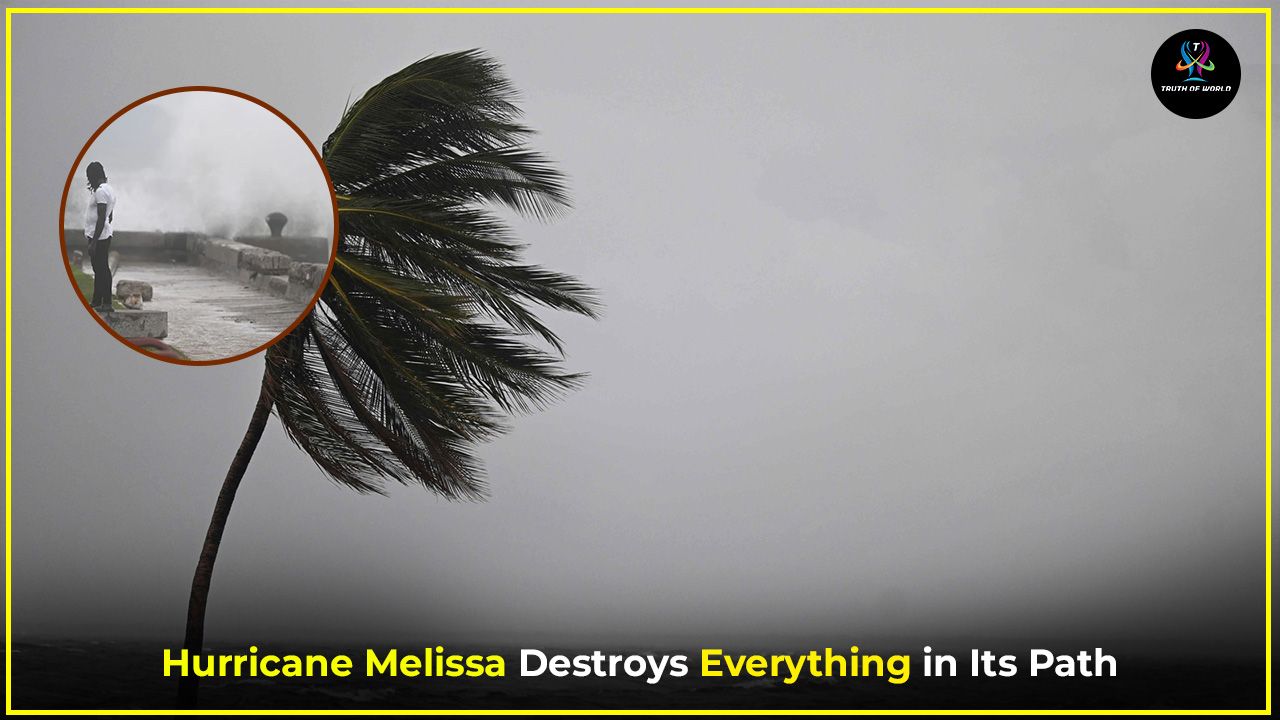
The island nation of Jamaica is facing what officials are calling a once-in-a-century event as Hurricane Melissa slammed into its southwestern coast on Tuesday afternoon, bringing sustained winds of 185 mph (295 kph) and a catastrophic storm surge that threatened to overwhelm communities already vulnerable to flooding.
This powerful storm a rapidly intensifying Category 5 hurricane at the time of landfall is the strongest to ever strike Jamaica since records began. Meteorologists warn that the worst of the damage may still lie ahead as the storm’s eye crossed the island and continues on toward Cuba and the Bahamas.
What Happened and Why It’s Historic
According to the National Hurricane Center (NHC), Hurricane Melissa made landfall near New Hope in Saint Elizabeth Parish, western Jamaica, early on October 28. The storm arrived with a central pressure of 892 mb and top sustained winds around 185 mph, making it among the most intense hurricanes ever recorded in the Atlantic basin.
It crossed the island slowly, causing prolonged exposure to extreme winds, torrential rainfall with some areas expecting up to 30 to 40 inches (75 – 100 cm) and life-threatening storm surge up to 4 meters in coastal areas, according to forecasters.
Immediate Effects and Damage
Widespread Power Outages & Infrastructure Collapse
Within hours of landfall, more than 70 % of Jamaica’s power grid was reported offline, leaving residents in darkness and complicating rescue or relief efforts. Several hospitals and emergency facilities reported structural damage, and roads and bridges were blocked by flooding and fallen trees.
Storm Surge, Flooding & Landslides
Coastal and low-lying communities faced massive storm surge and flooding; inland, Jamaica’s mountainous terrain triggered landslides that cut off sections of the island. In the parish of St Elizabeth, officials said entire neighbourhoods were submerged and searching for survivors was hazardouth.
Evacuations & Shelters
Ahead of the landfall some 800 shelters were opened across Jamaica, but many residents either delayed or declined to evacuate—leaving them exposed to severe risk. Over 15,000 people were reported to be in shelters at the time of landfall; agencies fear that many more remain in unsafe locations.
Deaths and Human Toll
Preliminary reports confirmed at least three fatalities in Jamaica during the lead-up to the storm, with more likely as rescue teams gain access to remote areas. Across the Caribbean, including Haiti and the Dominican Republic, the death toll is already rising.
Why This Hurricane Is Especially Dangerous
- Rapid intensification: Melissa gained strength unusually quickly over warm Caribbean waters, a trend scientists link to climate change.
- Slow movement: The storm moved slowly across Jamaica, prolonging its damaging winds and rains over the island.
- Topography of Jamaica: The island’s mountainous interior and complex drainage systems make it particularly susceptible to deadly landslides and flash-flooding under extreme rainfall.
- Infrastructure vulnerability: Many homes, roads and utilities in Jamaica are ill-equipped to withstand a direct hit from a Category 5 hurricane, increasing risks of collapse and isolation.
National and International Response
The government of Jamaica, led by Prime Minister Andrew Holness, has called for urgent international assistance. Officials are coordinating with the United Nations, regional Caribbean organisations and global partners to mobilise search-and-rescue teams, medical aid, food, water and temporary shelter supplies.
The U.S. State Department confirmed that Jamaica had formally requested assistance and was working with international donors to open relief corridors.
Areas to Watch and Ongoing Threats
- North-coast Jamaica: Even as the storm’s eye moves away, the counter-clockwise circulation is driving storm-surge and high surf along northern shores through the night.
- Eastern Cuba and the Bahamas: Melissa’s path continues toward southeastern Cuba and the Bahamas as a strong storm residents there must brace for threat.
- After-effects: Floodwaters will continue to cause damage long after winds subside; disrupted utilities, contaminated water supplies and blocked roads are among the expected challenges for recovery.
The Bigger Picture: Climate & Future Risk
Meteorologists emphasise that hurricanes of this magnitude hitting islands like Jamaica could become more frequent in a warming world. The extreme intensity of Melissa and its direct landfall has raised alarm bells about vulnerability in the Caribbean to high-end storms.
This event underscores the urgent need for enhanced disaster-preparedness, resilient infrastructure, and stronger early-warning systems throughout the region.
What Comes Next
The immediate focus will be assessing the full scale of the damage, accounting for missing persons, and beginning the relief operation. Jamaica faces a long road to recovery rebuilding homes and utilities, clearing landslides, restoring roads and restoring the livelihoods of communities hit by this unprecedented storm.
International agencies estimate that the cost of rebuilding could run into billions of dollars, and recovery may take months or even years in the most affected areas.
Hurricane Melissa’s landfall in Jamaica marks a grim milestone: one of the most powerful hurricane strikes in the Atlantic on record, and possibly the worst natural disaster in Jamaica’s modern history. As the island begins the grim process of recovery, the eyes of the world are on its response and resilience.
Communities are already battered. Homes are gone, infrastructure lies in ruins, and people are displaced. But in the face of such catastrophe, the strength of local communities, coordinated relief efforts, and international solidarity will be vital in turning tragedy into a story of survival and rebuilding.