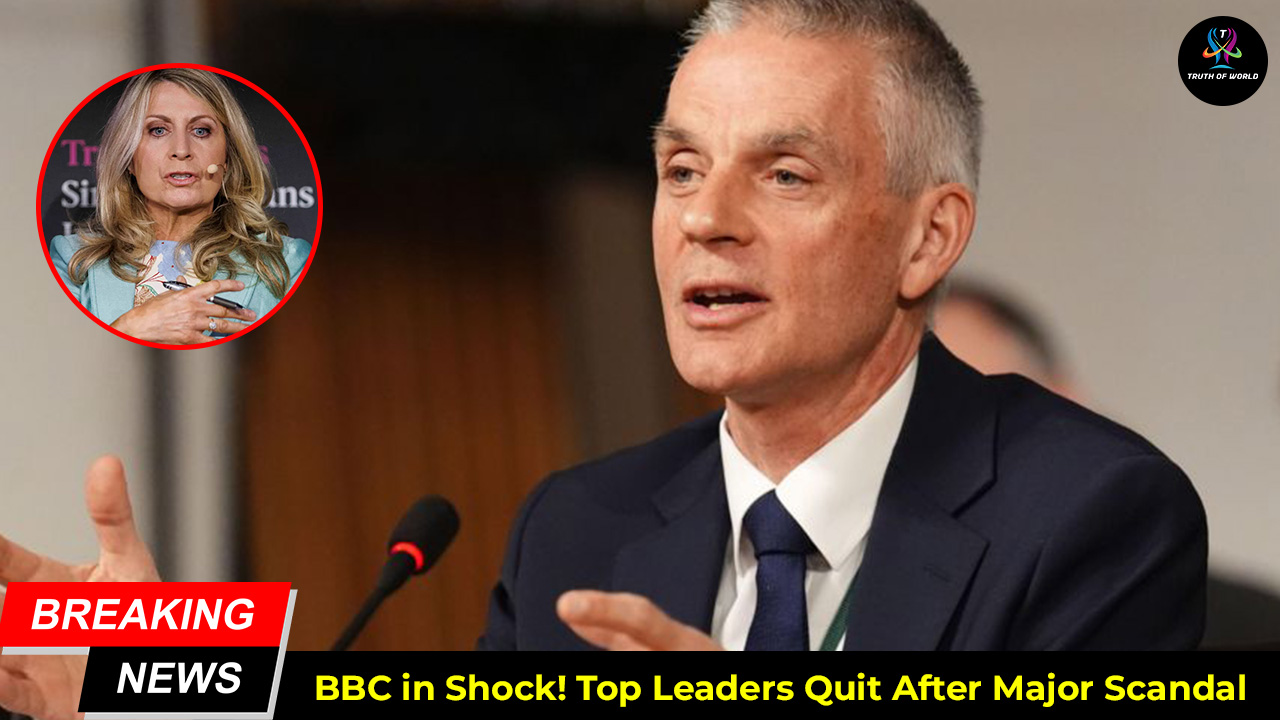
London, November 2025 — In a development that has sent ripples across the global media landscape, the British Broadcasting Corporation (BBC) has been thrown into turmoil after both Director General Tim Davie and BBC News CEO Deborah Turness announced their resignations on the same day. The sudden exits of the organization’s two most senior figures have sparked a nationwide debate over journalistic standards, editorial integrity, and political pressure on one of the world’s most respected public broadcasters.
The Breaking Point
The dual resignations came in the wake of a heated controversy surrounding a BBC Panorama documentary that allegedly misrepresented portions of former U.S. President Donald Trump’s January 6, 2021 speech. Critics accused the network of editing out crucial context that could have softened the perception of Trump’s role in the Capitol riots.
The internal review, launched earlier this month, reportedly found that a sequence of clips used in the documentary gave a misleading impression, suggesting Trump incited violence when his call for “peaceful protest” was omitted. The controversy snowballed after Trump’s legal team and several right-wing commentators accused the BBC of “intentional bias” and “election interference.”
The backlash placed the broadcaster at the center of a political storm. Facing mounting pressure from both Parliament and the BBC Board, Tim Davie decided to take responsibility and step down “in the interest of restoring trust.” Deborah Turness, who oversaw the news division, followed suit within hours, saying she could no longer lead “in an environment where the credibility of our newsroom is under constant assault.”
Tim Davie’s Statement
In an emotional resignation letter addressed to the BBC Board, Davie wrote:
“The recent debate over editorial integrity has overshadowed the good work of thousands at the BBC. While I stand by the intentions behind our journalism, it’s clear that leadership accountability requires stepping aside to allow the organization to renew itself.”
Davie’s four-year tenure as Director General was marked by a push toward digital transformation and international expansion. He introduced BBC Verify, a fact-checking unit aimed at combating misinformation, and spearheaded a controversial cost-cutting strategy that merged several TV and radio departments under one digital umbrella.
However, Davie’s tenure was not without turbulence. He faced repeated accusations of political bias, funding challenges amid the debate over the UK TV licence fee, and backlash over BBC’s coverage of sensitive geopolitical issues, including the Israel-Gaza conflict and transgender rights reporting.
Deborah Turness: A Trailblazer Steps Away
Deborah Turness, a pioneering figure in broadcast journalism and the first woman to lead BBC News, expressed deep regret in her farewell note:
“I am incredibly proud of what our journalists achieve every single day. But the weight of public distrust and political noise has reached a level that makes it impossible to lead effectively. BBC must now rebuild its covenant of trust with the British people.”
Turness joined the BBC in 2022 after a distinguished career at ITN and NBC News in the United States, where she was praised for her modern newsroom approach and focus on storytelling diversity. Her departure signals not only a leadership vacuum but also a potential shift in BBC’s internal culture one that may redefine the balance between editorial independence and public accountability.
Inside the Controversy
According to insiders, the Panorama team responsible for the Trump documentary had followed all editorial checks and compliance steps. Yet, when the issue exploded on social media, political commentators and former BBC employees demanded an external investigation.
The BBC’s internal audit, chaired by Michael Prescott, confirmed that the editing “failed to meet the broadcaster’s standards of accuracy and impartiality.” The report emphasized that while the mistake was “not deliberate,” it had “significant reputational consequences.”
The fallout was swift. Politicians from both the Conservative and Labour parties called for “an urgent review” of the BBC’s editorial procedures, while U.S. figures, including several Republican senators, condemned the network’s “interference in global political narratives.”
A Crisis of Trust
For decades, the BBC has been considered the gold standard of impartial journalism, supported by a public funding model through the licence fee. However, the recent string of controversies from the Gary Lineker tweet saga to the handling of international conflicts has eroded trust among sections of the British public.
Media analysts argue that the twin resignations mark the most significant leadership crisis since 2004, when Director General Greg Dyke resigned over the Iraq War dossier controversy. The current episode, however, may run deeper, touching not only on individual errors but on systemic challenges facing traditional news organizations in the digital era.
“The BBC’s crisis is not just about one documentary,” said Professor Jane Holloway, a media ethics scholar at the University of Leeds. “It’s about the shifting nature of truth, perception, and accountability in a hyper-polarized information environment.”
Impact on the BBC and Its Future
1. Leadership Vacuum
The sudden departure of both Davie and Turness leaves the BBC without a clear chain of command. The Board has appointed Deputy Director-General Charlotte Moore as Acting Director General until a permanent replacement is found. Industry insiders expect a global recruitment process to follow, potentially bringing in leadership from outside the UK.
2. Financial and Structural Pressure
BBC’s Royal Charter renewal in 2027 will determine its funding model and independence from government oversight. Analysts warn that the current crisis could weaken the BBC’s negotiating power and invite calls for greater privatization or commercial partnerships.
3. Editorial Independence Debate
This incident may accelerate the long-running debate about how the BBC can remain impartial in an age of politicized narratives. Critics from both the right and left argue that the corporation needs stronger internal firewalls between journalists, editors, and management.
Reactions from the Media World
The resignations drew mixed reactions from across the journalistic spectrum.
– The Guardian described the departures as “a painful but necessary correction.”
– The Telegraph criticized the “overreaction to political pressure,” suggesting Davie had been forced out unfairly.
– Reuters called it “a defining moment for global public broadcasting.”
– Former BBC anchor Emily Maitlis tweeted: “Sad day. Accountability is vital but leadership under siege cannot serve journalism’s purpose.”
Meanwhile, the UK government has confirmed that Culture Secretary Lucy Frazer will meet the BBC Board later this week to “discuss next steps and ensure transparency moving forward.”
Public Sentiment and Global Perception
On social media, reactions were polarized. Supporters of Trump and conservative commentators hailed the resignations as “a victory for truth,” while many in Britain lamented the political intrusion into public media.
Globally, broadcasters such as CBC, NHK, and ABC Australia expressed concern that public trust in non-commercial media might decline further. The European Broadcasting Union (EBU) issued a statement urging solidarity among public media institutions “facing unprecedented external pressure.”
Looking Ahead
As the BBC prepares to rebuild, its immediate priorities will include:
- Appointing new leadership capable of restoring credibility and unity.
- Reassessing editorial guidelines to ensure transparency in documentary production.
- Reconnecting with audiences, especially younger viewers who increasingly consume news via digital platforms.
Experts say the next Director General will have to balance modernization with moral authority a task that demands both courage and vision.
“The BBC cannot afford another crisis of confidence,” said media consultant Rory Gilmore. “Its survival depends on convincing the public that it stands above politics, not inside it.”
The resignation of Tim Davie and Deborah Turness marks the end of an era and possibly the beginning of a reckoning. What was once seen as the world’s most trusted broadcaster now finds itself grappling with the same fragility and fragmentation that afflicts the modern media ecosystem.
The BBC’s challenge is not just to replace its leaders, but to redefine its identity for the 21st century one where truth is contested, technology accelerates misinformation, and public trust is earned anew every day.
As Britain watches closely, one thing is clear: the next few months will decide whether the BBC emerges stronger — or fades into the very noise it once promised to rise above.